Thinking Through Form
The European Renaissance (roughly the 14th–17th centuries), a period that valued the ideal of the uomo universale—the “universal person.” The belief was that human potential is fullest when intellectual, artistic, and scientific capacities are developed together.
My foray into technology happened almost entirely by accident. Straight out of high school (practically), I was invited; through an academic connection, to consult at an intern, user-level capacity on UX for Adobe. I had grown up without a computer (a long story). Technology was not my world.
And yet, I took to Adobe software immediately. Not only could I use the tools for their intended purposes, I could operate them instinctively and begin suggesting optimizations from a bird’s-eye view. At the time, nothing that visually powerful or conceptually integrated had existed on the market. I became deeply fluent in Illustrator, Photoshop, InDesign, and eventually After Effects and Premiere, working for years with pixels, vectors, motion, and layered systems across a wide range of productions.
In retrospect, this may explain something that still surprises me.
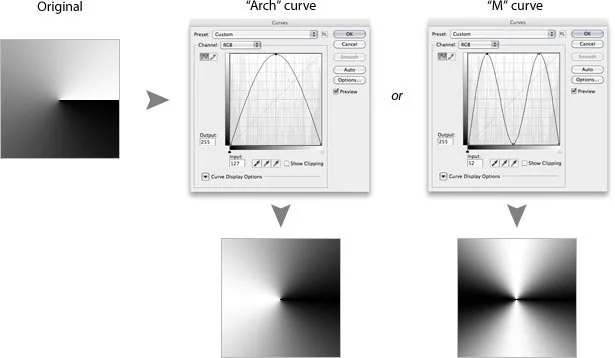
When I now listen to physicists or quantum researchers talk about meshes, Gaussians, bell curves, noise, or dithering, I can see the system immediately. The theory makes intuitive sense. But when the same ideas are presented numerically, as physics problems almost always are, I draw a blank. It still feels miraculous that I earned A’s in all of my AI systems, physics, and astrobiology courses, because the mathematics required was often borderline impossible for me. What consistently saved me were the visual system models; and, as always, the final research papers, where conceptual understanding mattered more than numerical fluency.
In trying to understand how it is I can know so much of what I don’t actually know in the traditional sense, I found that Albert Einstein famously reported that he did not think in equations or words at all, but in images, sensations, and “thought-experiments” structured by music, that he saw play out in his mind; the mathematics came later, as a translation rather than a source of understanding.
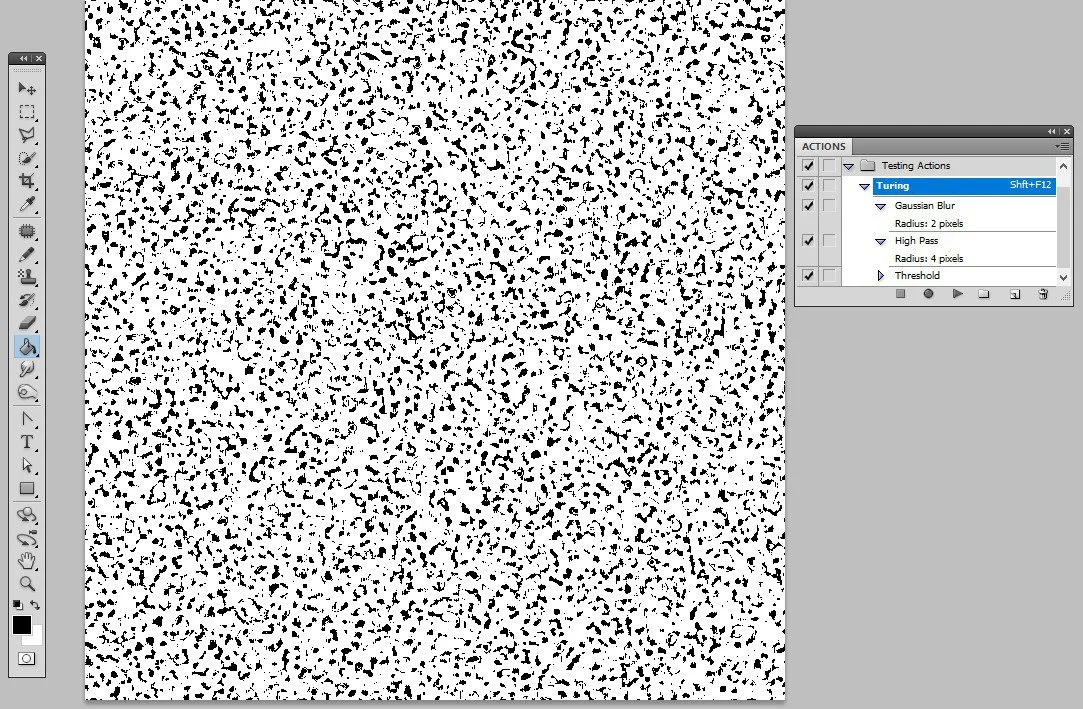
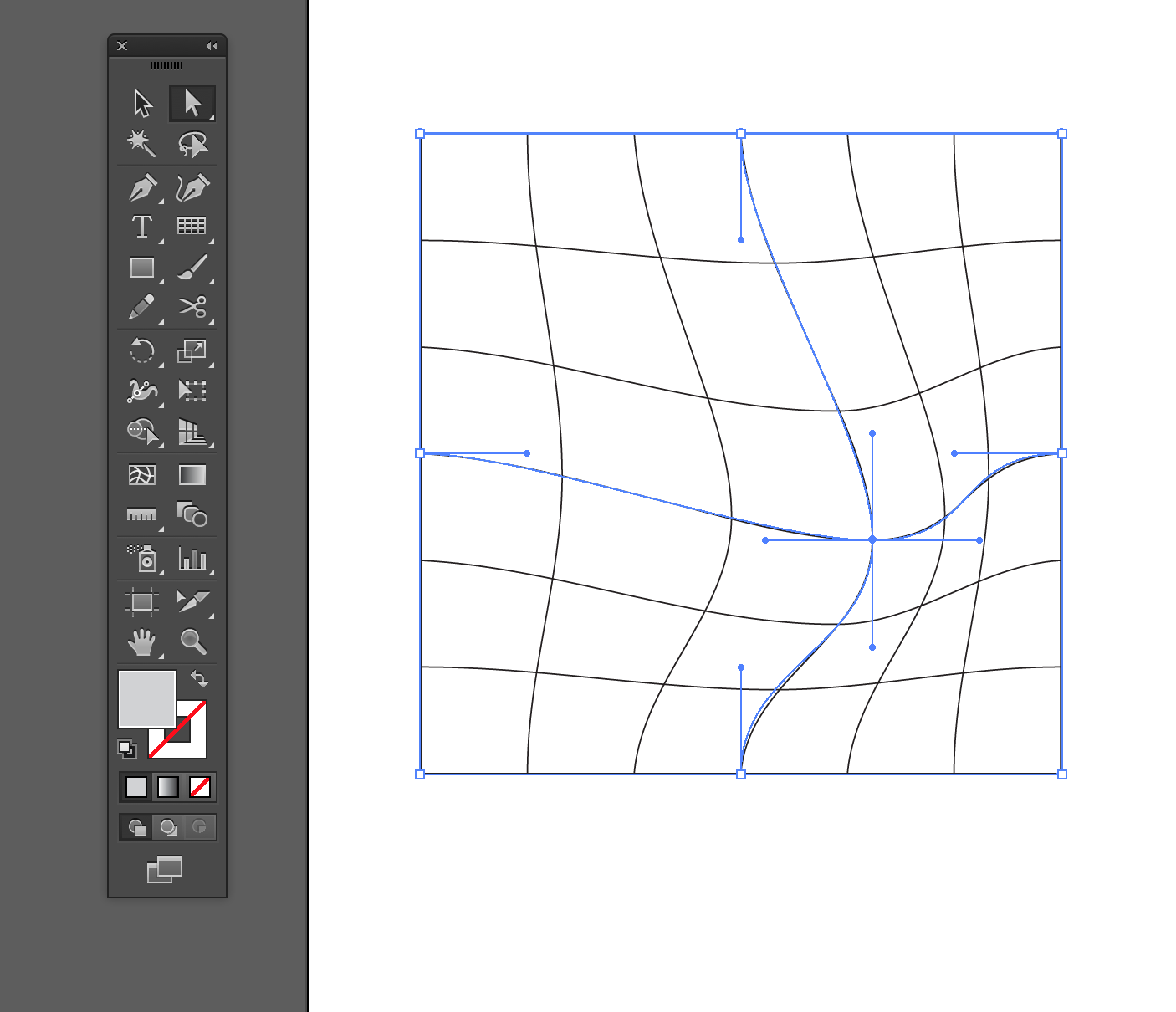
Recently, an accomplished physicist posted a newly published paper on AI processing of generated images, breaking down the math and science behind it. I couldn’t fully follow the equations. But when I reframed the paper in terms of Photoshop, bell curves as tonal distributions, Gaussians as blur kernels, pixels as probability-weighted states, the concepts and even the conclusions became clear. When I extended that thinking further, applying vector logic the way I would in Illustrator —optimizing paths, reducing render load, compressing outputs for print, the same principles translated cleanly into ideas about computational efficiency and processing reduction. This also begins to translate to quantum systems.
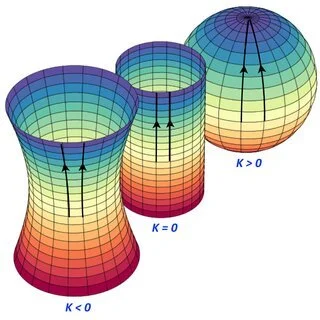
But this doesn’t feel normal. I’ve never met anyone who processes this way; almost entirely through internal visual models. I have to see everything in my mind before I can understand it. Even abstract ideas like spacetime fabric or manifolds connect, for me, to visions, dreams, or fragments of vivid visual experiences from childhood.
When I’m given a step-by-step process, my thinking often stalls. In traditional learning environments, this can be misread as a lack of ability. Yet when I’m allowed to think in systems: visually, spatially, and relationally, I can grasp ideas far beyond anything I’ve formally studied, and often beyond what is expected.
So what does this mean?
Perhaps it is biological, or perhaps it has to do with the fact I really had very little formal education until recently.
In exposing myself to physics and AI systems the last four years, I’ve come to understand that my mind is organized around seeing structure before performing procedure. I rarely learn by accumulating steps or symbols in sequence. Instead I must form a complete internal model of a system and then reasoning within it. Step-by-step instruction fails me, because it withholds the very thing your cognition requires in order to engage: the whole field. When that field is absent, the steps feel arbitrary and my brain shuts down; not from inability, but from lack of coherence (or boredom in some cases).
By contrast, when I’m allowed to think visually, spatially, and relationally, I can grasp ideas far outside formal training because I’m operating at the level where theory is actually born.
Years spent working inside of Adobe’s visual systems trained me to manipulate probability, constraints, transformation, and optimization as living structures rather than abstract symbols, which is why physics, AI, and quantum concepts suddenly become intelligible once they are rendered as images, diagrams or systems instead of equations.
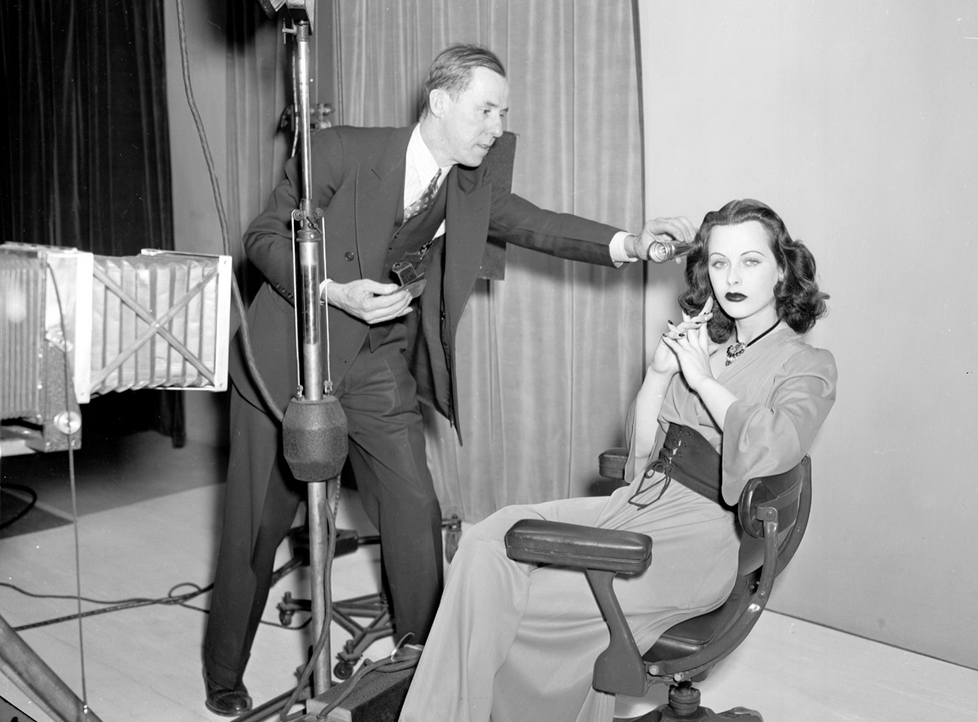
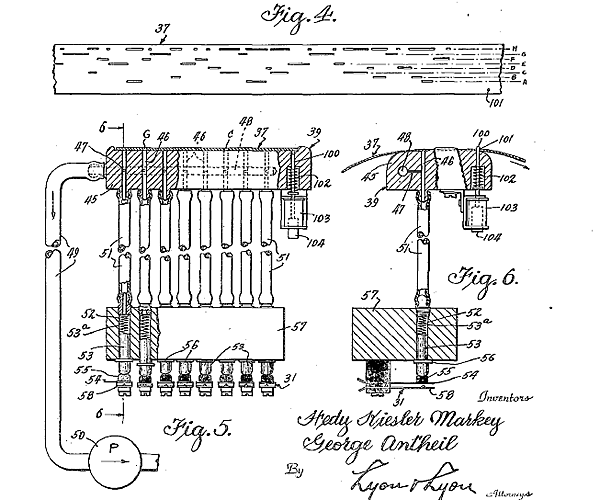
Hedy Lamarr the famous actress who invented the technology we now use for wifi and blue tooth, worked the same way, she conceived frequency-hopping spread spectrum not by formal engineering training but by visualizing interference, timing, and pattern disruption as a system, long before the math was formalized by others. Similarly, Michael Faraday, who had almost no mathematical education, understood electromagnetism through intensely visual “lines of force,” which mathematicians later converted into equations.
What this suggests is that my way of understanding is not aberrant, but simply upstream of convention.
The history of science quietly confirms this: many foundational ideas were first seen before they were solved. My experience with Adobe’s visual systems may have not taught me the standard method of conveying them, but it trained me in another formal language for them. If anything, this way of thinking explains how I can understand so much of what I have often never formally learned: I am not memorizing answers to equations, but having visions, recognizing structures. And once the vision forms, understanding follows naturally, almost inevitably, no matter the domain.